
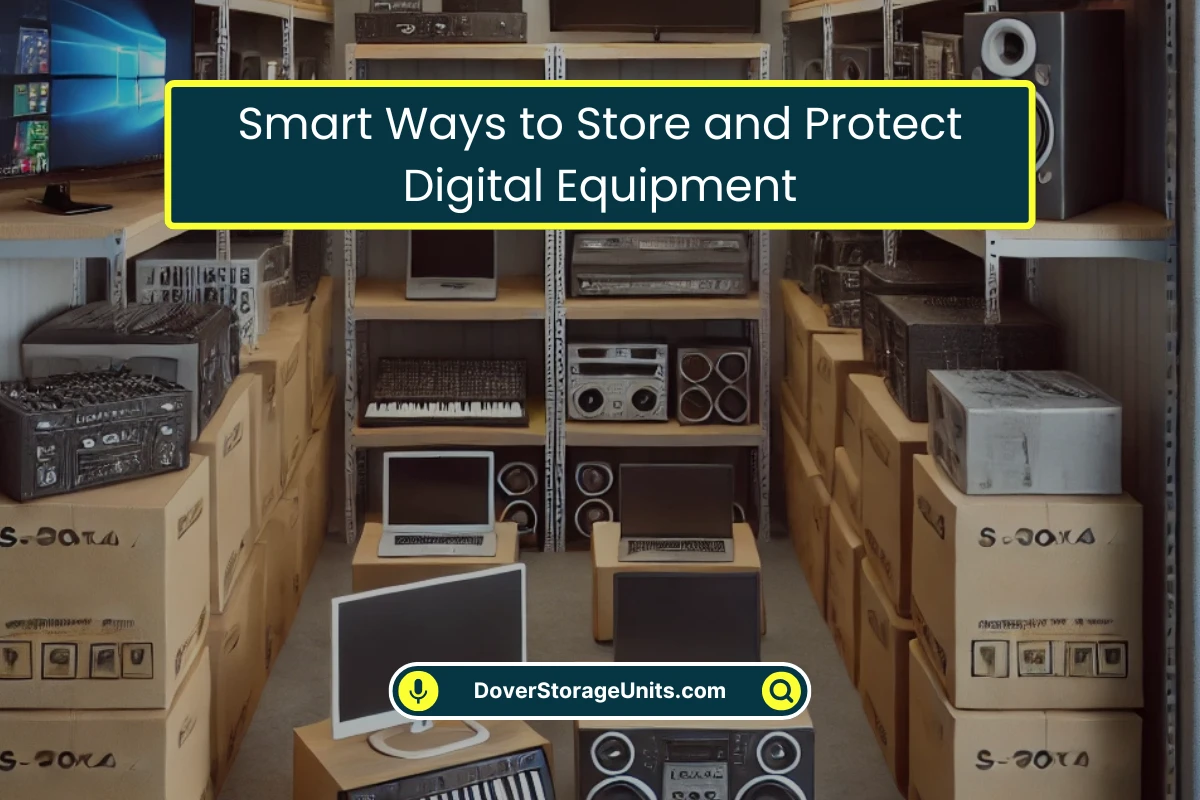
I lost my daughter’s first steps.
Sounds dramatic, right? It is. It’s also stupidly common. It wasn’t a fire or a theft. It was a green plastic hard drive, the kind you buy on sale at a big-box store. I’d been “smart.” I backed up all our photos and videos onto it. Then I put it… wait for it… on a shelf in the garage. “Up and out of the way,” I thought.
Two years later, my computer crashed. “No problem,” I said, smugly. “I’ve got the backup.” I pulled the drive down. It was weirdly warm to the touch. I plugged it in. It made a sound I can only describe as a dying coffee grinder. Then nothing. A faint smell of ozone. That was it. Years of digital life—the chaotic, beautiful, mundane record of our family—locked inside a dead plastic brick. The tech guy I took it to just shook his head. “Garage?” he said. “Summer heat, winter cold, humidity. It’s a graveyard.”
I paid $500 for a data recovery service. They saved about 60% of it. The first steps video? Gone. A blurry, low-res version my wife had texted to her mom was all that remained.
So when you talk about storing “backup digital equipment safely,” my eye starts twitching. I’m not coming at this from a textbook. I’m coming at it from a place of deep, personal regret.
Your Backup is Not a Paperweight (It’s a Lifeboat)
Your backup isn’t a backup if it’s sitting in the same disaster zone as your original.
Think about it. If your house floods, burns, or gets hit by a tree, what happens to that external drive in your desk drawer? Same as the computer. Toast. If you’re backing up to a drive and leaving it in the same room, you’re just creating a twin to die with its sibling. You’re not saving anything. You’re just making the loss more symmetrical.
So, Step One is psychological: Your backup drive is not a paperweight. It’s a lifeboat. And a lifeboat doesn’t stay tied to the sinking ship. It has to get away.
The Non-Negotiable Prep List
Physically, the prep is simple but you can’t skip it:
- Get it out of the house: Not the garage. Not the attic. Out. This is the core of the “off-site” in every backup rule you’ve ever skimmed. A friend’s house. Your office. Your parent’s place. Anywhere that isn’t here.
- Make it tough: That flimsy retail cardboard box won’t survive a dropped grocery bag. Get a plastic bin with a gasket seal. The kind meant for camping or basements. It should go “thunk” when you close it, not “flap.”
- Fight moisture silently: You know those tiny silica gel packets? Start hoarding them like a weirdo. Or just buy a big tub of them online for ten bucks. Dump a handful in the bin. They are the silent army fighting the dampness that ruins everything.
- Write a letter to your future self: Slip a piece of paper on top. What’s on the drive? What computer did it come from? What’s the password if it’s encrypted? “Photos 2018-2021, from the old silver Dell, password is ‘Fluffy2021!'” In two years, you will have no memory of this. This note will save you hours of panic.
But Where, Though? (The Off-Site Dilemma)
Now, about that “off-site” location. Your buddy’s basement is better than your own, but is it good? Is it climate-controlled? Is it secure? Will his kid use your bin of important stuff as a step stool? Probably.
This is the part where my solution—what I do now, and what our business provides—makes sense not as a sales pitch, but as a scar-tissue lesson.
The “Boring Room” Solution
After my garage disaster, I got paranoid. I needed a place that was the opposite of my garage. A place that never changed. I needed a boring room. A room with no windows, no temperature swings, no humidity, and a lock that only I had.
That’s all a climate-controlled storage unit is for this purpose. It’s a boring, safe, off-site room you rent. You’re not storing stuff there. You’re storing certainty.
You do your prep: the drive, the bin, the silica gel, the note. You drive it ten minutes away. You put it in a 70-degree, bone-dry, perfectly boring little concrete room. You lock it. You leave.
The Magic is in the Forgetting
You can actually stop thinking about it. The low-grade anxiety hum that comes from knowing your memories are slowly cooking next to the lawnmower gas? It stops. It just evaporates. You’ve done the thing. The lifeboat is launched. Your data is now safer than the computer on your desk. It’s off the grid of your daily life, but still within reach.
A Simple Annual Ritual
Once a year, I go to my unit. I swap out the drives. I take the old one home, update it with the new year’s photos, and bring it back, swapping it with the one that was there. It’s a ritual. It takes 30 minutes. It’s the least I can do for the memories I have left.
Don’t be like the old me. Don’t learn this because you hear the coffee-grinder-of-doom sound. Learn it because you never, ever want to. Get that backup out of your house. Put it somewhere boring, safe, and far from the daily chaos. Your future self, the one who hasn’t yet lost anything, will thank you.
It’s not about storage. It’s about keeping promises to the past.








0 Comments